
Surface waters
Siilinjärvi has 126 lakes and several rivers and streams. 21.6% of the municipality’s surface area is covered by water, which is slightly more than the average for Northern Savonia. Information on the water quality of lakes is obtained from surveys and from mandatory monitoring of installations subject to environmental permits. Open information on the status of lakes and other water bodies can be found, for example, on the map service on vesi.fi.
Water management is regulated by the Act on the organisation of water management and marine management (Water Management Act). The aim of water management is to improve and restore rivers, lakes, groundwaters and coastal waters to a good status. It also aims to prevent the deterioration of waters of good quality.
Under the Water Management Act, Finland is divided into water management areas based on the catchment areas of water bodies. The water bodies of Siilinjärvi are part of the Vuoksi river basin management area. Water management plans are drawn up for a period of six years at a time. The 2022-2027 river basin management plan for the Vuoksi river basin management area was approved by the Council of State on 16 December 2021. Detailed needs for action are described in the North Savo River Basin Management Operational Programme. It is also reviewed every six years. The approved plans must be taken into account when granting environmental and water permits.
Eutrophication of lakes causes overgrowth of shorelines, blue-green algae blooms, siltation of nets, acidification and fish kills. Eutrophication is mainly the result of nutrients being transported from land to water by waste water or water from fertilised areas. The consequences of eutrophication are detrimental to the recreational use of lakes. This damage can be reduced by restoring the lakes.
In lake restoration, the initiative usually comes from the people living on the shore. Lake restoration projects are usually the responsibility of a conservation association set up for this purpose. Before any action is taken on a lake, it is important to ensure that external pressures on the lake are minimised. Measures often include reducing nutrient run-off from erosion-prone and sloping shoreline fields, e.g. through buffer zones and wetlands, or improving/upgrading the efficiency of residential wastewater treatment systems.
The most common measures to restore the lake include acidification, dredging and removal of aquatic plants, chemical phosphorus sequestration, management fishing and predator stocking, and raising the water level. To achieve a lasting result, measures often need to be continued over several years or on a regular basis. Information on lake restoration is available through the national network for water body restoration. It also provides information on funding available for water management and restoration. The Centre provides advice, guidance and support for the planning and implementation of restoration and management of water bodies, and is usually involved in restoration as a partner. For water management projects and permits, such as mowing aquatic plants and dredging the shore, the Finnish Supervisory Agency is consulted.
The municipality of Siilinjärvi may promote projects that are of more general importance for the environmental protection or other public interest of the municipality. The municipality will consider participation in lake restoration projects on a case-by-case basis.
Siilinjärvi catchment management plan
The Siilinjärvi catchment management plan project started in 2025 and will run until 2027, creating a management plan describing concrete measures to be taken on the land to improve water quality. The aim of the project is to identify the current situation in the catchment and to build a common understanding of the measures needed among different actors, key stakeholders and residents. The Savo-Karjan Vesiensuojeluyhdistys ry is the project’s implementing and managing body.
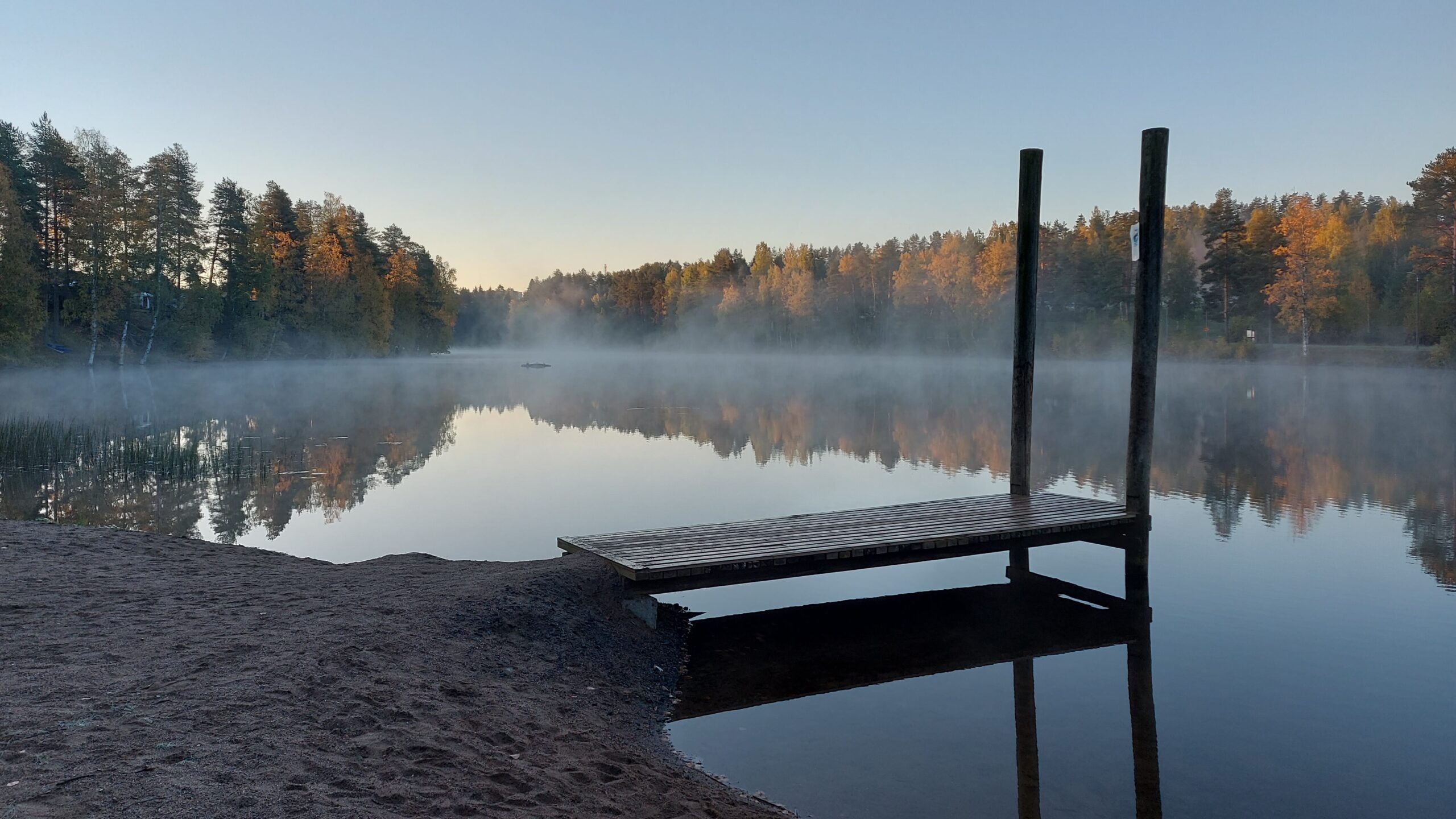
Ahmo pond
The pond called Ahmo is located in the village of Siilinjärvi. The water quality in Ahmo was poor for a long time and blue-green algae blooms were abundant in the pond. In several winters, the oxygen status of the pond had deteriorated, resulting in fish kills. To prevent this, the deep water at the northern end of the Ahmo is continuously oxygenated.
As oxygenation was not fully sufficient to prevent blue-green algae blooms, sediment and water quality studies were carried out in 2017 to improve the status of the Ahmo, and a restoration plan was drawn up. The remediation was carried out in 2019 and involved the binding of release-sensitive phosphorus in the bottom sediment with the chemical phoslock. The aim was to prevent algal blooms by reducing the availability of water-soluble phosphorus nutrients. Monitoring showed that the remediation was successful. Chemical remediation is often the last remediation method used when other remedial measures taken do not help the water body. After remediation, phosphorus nutrients are slowly released from the bottom of the pond back into the water, so the condition of the pond will continue to be monitored.
Tarina river system
The Tarina river system is located on the Tarinanharju hill in Siilinjärvi. The river system includes lakes and ponds, such as Syvä-Kumpunen, Kirves-Kumpunen and Apaja-Kumpunen. There have been concerns about the status of these water bodies for several decades. In particular, extensive blue-green algal blooms have been observed in the Syvä-Kumpunen and Aumanalanen. A research project was carried out in 2017 and 2018 to investigate the water quality of the Tarina river system.
Siilinjärvi
Siilinjärvi is an important lake in the middle of the village, which serves the local residents for recreation, fishing and as a connection to the Juurusvesi. The ecological status of Siilinjärvi is satisfactory. Due to its isolation, nutrients and pollutants entering the lake remain in the water for long periods of time. Blue-green algae blooms occur in Siilinjärvi every summer. A research project carried out between 2020 and 2022 identified the causes of the deterioration of the ecological status of Lake Siilinjärvi. The 2025-2027 Siilinjärvi catchment management plan project will also investigate land-based improvements to Lake Siilinjärvi that will reduce nutrient inputs to the lake.